
An Airbnb Payout Scam We Stopped (And What Every Host & Cohost Needs to Know)
Introduction: Because Apparently, Scammers Don’t Take Vacations
If you manage short-term rentals long enough—especially on platforms like Airbnb—you eventually realize one thing: scammers work harder than peak-season housekeepers on a Saturday turnover.
Recently, our team at CRSJ Rentals, a full-service Airbnb property management company based on Topsail Island, North Carolina, experienced a highly sophisticated scam attempt targeting Airbnb payouts. No funds were lost, no guests were impacted—but the tactics were convincing enough that we felt obligated to share the story.
This isn’t a “we got hacked” post.
This is a “here’s how a real Airbnb scam works in 2025, and how to protect yourself” post.
If you’re an Airbnb host, cohost, or property management company—especially one managing payouts for multiple properties—this is worth five minutes of your attention.
The First Red Flag: A “Trust-Building” Call Before the Breach
Interestingly, the scam began before any breach alert. On Friday, we received a phone call from someone claiming to be from Airbnb.
They said:
They were investigating suspicious activity
Someone was attempting to advertise our listings under a different name (“CRSJ Rentals” was referenced)
They wanted to help confirm ownership and protect our account
No passwords were requested. No banking information was asked for. The tone was calm, professional, and reassuring.
In hindsight, this preemptive call was part of a planned, multi-stage social engineering attack. By contacting us first, they were conditioning us to trust calls from “Airbnb representatives.” That way, if they later needed us to act under urgency, it would seem normal.
Analogy moment:
It’s like a magician subtly drawing your attention before the big trick—by the time the real action starts, you’re already following their lead.
Monday Morning: Airbnb Security Email & Smart Response
The official breach alert arrived Monday at 1:05 AM:
“Your account needs to be reviewed.
Before you can log back in, we’ll need to secure your account and review any changes made without your permission.”
We immediately acted. In the morning, we noticed unfamiliar bank accounts had been added. As a smart response to the security alert, we:
Deleted the unknown bank accounts
Reset the Airbnb password
This decisive action disrupted the scammers’ plans and forced the next phase: a more sophisticated, urgent phone call.
Host tip:
Sometimes the best offense is a strong, deliberate defense.
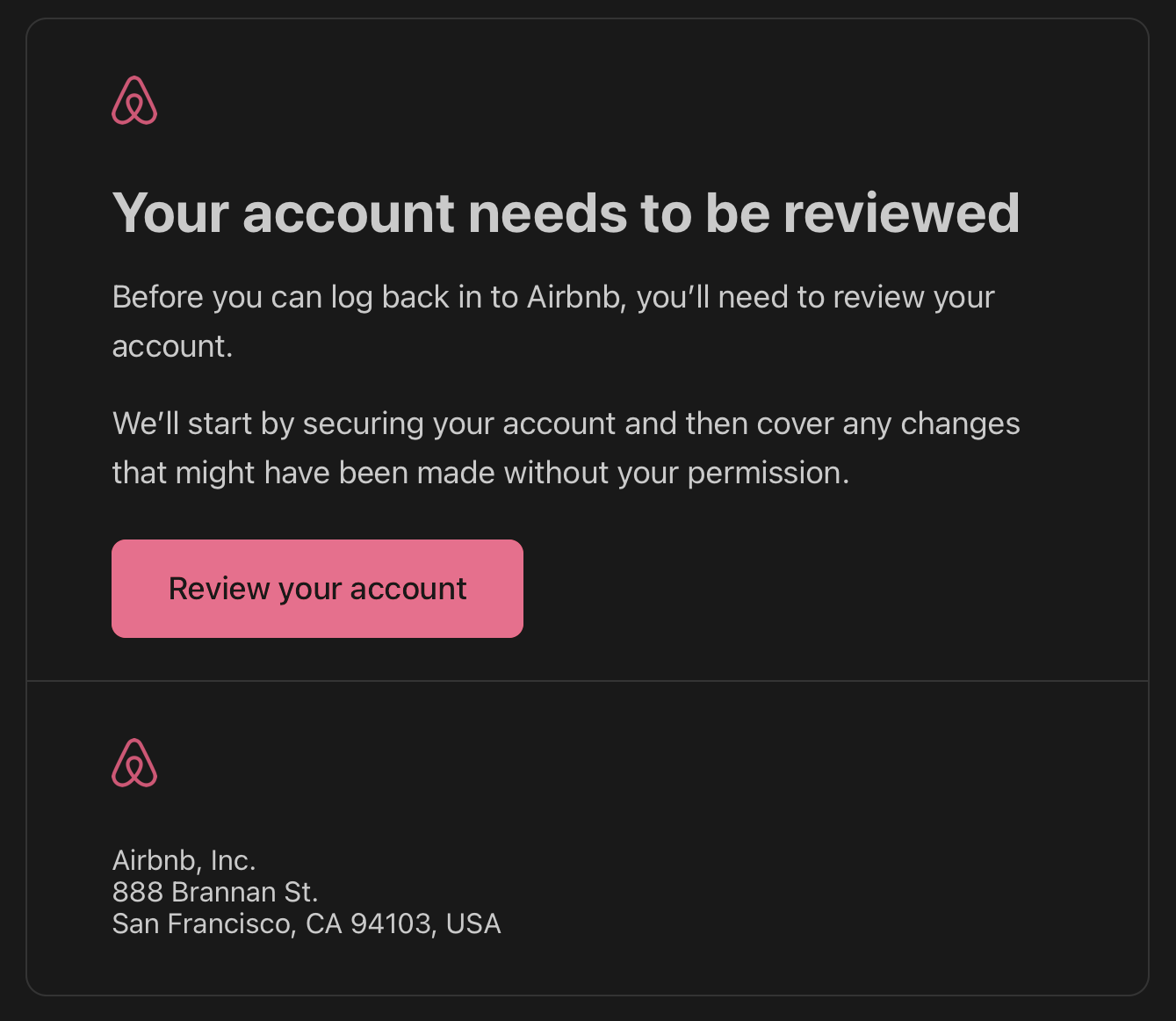
Screenshot of an Airbnb account security alert received by CRSJ Rentals, warning the host to review the account after suspicious activity.
The Second Call: Where the Scam Revealed Itself
The following day, the same “Airbnb representative” called again. This time, urgency was the tactic.
They told us:
Airbnb wanted us to set up a temporary test payout account
They would deposit $0.01
If the deposit didn’t arrive, it would “confirm” our banking information had been compromised
If the account was compromised again, it could be permanently suspended
All bookings—past and future—would be lost
Then came the pressure:
“Are you able to resolve this now? Can we set this up together?”
This is when we paused. Urgency is a scammer’s favorite tool—and Airbnb, like most legitimate platforms, does not operate this way.
The Moment That Saved Us: Slow Down and Verify
Instead of complying, we asked:
“Can you send this request through official Airbnb communication so we can review it?”
The response? Deflection.
We hung up and called Airbnb directly. Support confirmed:
They did not call us that day
They had not called us in the past week
Airbnb does not request banking changes over the phone
All official communication happens inside the Airbnb platform
This verification step stopped the scam in its tracks.
What We Found Inside the Account (The Real Endgame)
After inspecting the account, we discovered the scammers had already changed our minimum payout threshold to $50,000.
This wasn’t random:
Airbnb normally releases payouts regularly
By raising the threshold, funds quietly pile up
Once enough revenue accumulated, scammers would attempt to redirect it to their account
The phone call asking for a “test payout account” wasn’t a test—it was a last-ditch attempt to regain access and steal the accumulated funds.
Host translation:
They weren’t robbing the cash register—they were waiting for payday.
How They Likely Gained Access (And Why It Wasn’t Our Fault)
We practice very good security practices, yet professional attackers can still gain entry. Likely methods include:
Phishing: Convincing hosts to enter credentials on fake login pages
Session theft: Malware or compromised devices capturing active logins
Credential reuse: Using passwords leaked from other sites
Keylogging or compromised networks: Malicious software or insecure Wi-Fi (including public networks or even Wi-Fi at an Airbnb you’re staying in) can capture keystrokes or active login data
Even the most careful hosts and cohosts can be targeted, which is why awareness and vigilance are key.
Why This Matters for Airbnb Cohosts & Property Managers
This scam was sophisticated and targeted accounts with consistent revenue—like those managed by professional Airbnb property managers.
For CRSJ Rentals:
We manage vacation homes across Topsail Island
Owners have transparent, real-time payouts
We coordinate bookings, guest communication, and turnover
All of these advantages also make security diligence critical, because even small oversights can become opportunities for scammers.
Many individual hosts never check payout thresholds or monitor added bank accounts—exactly what scammers rely on.
Best Practices Every Airbnb Host Should Follow
1. Airbnb Will Not Call You
Ever. Not for tests. Not for emergencies. Not for “just one quick step.”
2. Never Act Under Phone Pressure
Urgency is a scammer’s oxygen. Legitimate platforms allow time and written confirmation.
3. Always Verify Through Official Channels
Hang up. Log in directly. Call Airbnb yourself. If it’s real, it’ll still be real in 10 minutes.
4. Regularly Review Payout Settings
Check payout methods, thresholds, and bank account changes. Scammers count on hosts not noticing small changes.
5. Don’t Answer Unknown Numbers During an Incident
If there’s a security concern, every inbound call is suspect. Let it go to voicemail and verify before acting.
Why We’re Sharing This (And Why It Matters)
As a Topsail Island property management company, our job isn’t just to maximize revenue—it’s to protect it.
We stopped this scam because we:
Paused before acting
Verified communication independently
Practiced strong security measures
No funds were lost. No bookings were impacted. And Airbnb confirmed their systems were secure.
Sharing this story helps hosts, cohosts, and property managers recognize the warning signs before it’s too late.
Final Thoughts
Scammers don’t break down doors anymore.
They knock politely, wear a badge, and ask if now’s a good time.
For Airbnb hosts, cohosts, or professional property managers on Topsail Island, the takeaway is simple:
Slow down. Verify everything. And never let fear make financial decisions for you.
If you’d rather have peace of mind when managing your properties, that’s exactly the kind of support we provide.
Want a clearer picture of your rental’s revenue potential?
Download the Topsail Revenue Insider — a free, instant-download guide that reveals the most common ways local properties quietly underperform and how owners fix them.