
CapEx Planning for Vacation Rental Owners: How Smart Saving Protects Your Profits (and Your Peace of Mind)
Every vacation rental owner has heard some version of this line:
“Well… there goes my bonus. Had to replace the roof.”
The first time we heard it, our reaction wasn’t sympathy—it was confusion. Not because roofs are cheap (they are very much not), but because roofs are predictably expensive. They don’t fail out of spite. They age. Slowly. Loudly. Inevitably.
That moment sparked what would become a cornerstone of how we think about CapEx planning for vacation rental owners. What started as basic budgeting curiosity turned into a deeper realization: the most successful asset owners aren’t lucky—they’re prepared.
In this article, we’ll break down what CapEx really means, why it matters especially for coastal short-term rentals, and how smart planning protects your income, your guest experience, and your sanity.
What CapEx Really Means for Vacation Rental Owners
CapEx—short for Capital Expenditures—sounds like something best left to accountants and people who enjoy spreadsheets a little too much. In reality, it’s much simpler.
CapEx refers to large, infrequent expenses required to maintain or replace major components of your property. Think:
Roofs
HVAC systems
Appliances
Flooring
Decks and exterior structures
Unlike routine maintenance (lightbulbs, filters, minor fixes), CapEx expenses are inevitable and measurable. You may not know the exact month they’ll happen—but you can be confident they will.
A helpful way to think about it:
Maintenance is brushing your teeth. CapEx is the root canal you avoid by doing it consistently.
How Budgeting Turned Into a CapEx Mindset
Before CapEx had a name, it started as observation.
While diving into personal budgeting and financial education, a pattern became impossible to ignore. Coworkers would regularly say things like, “There goes my bonus—had to replace the roof,” or “Didn’t plan on needing a new transmission this year.”
The surprise wasn’t the expense—it was the surprise itself.
So the question became: Why aren’t people saving for expenses they know are coming?
That curiosity turned into a spreadsheet. Every major asset was listed—roof, car, appliances—along with:
Replacement cost
Expected lifespan
Monthly savings required
The result? A number that was… eye-opening. Hundreds of dollars per month. For things that weren’t emergencies at all—just depreciation doing its job.
At the time, it was called an Asset Depreciation Fund. Later, entering the business world made it clear: companies do this all the time. CapEx planning isn’t optional for businesses—it’s fundamental.
And vacation rentals? They’re businesses wearing flip-flops.
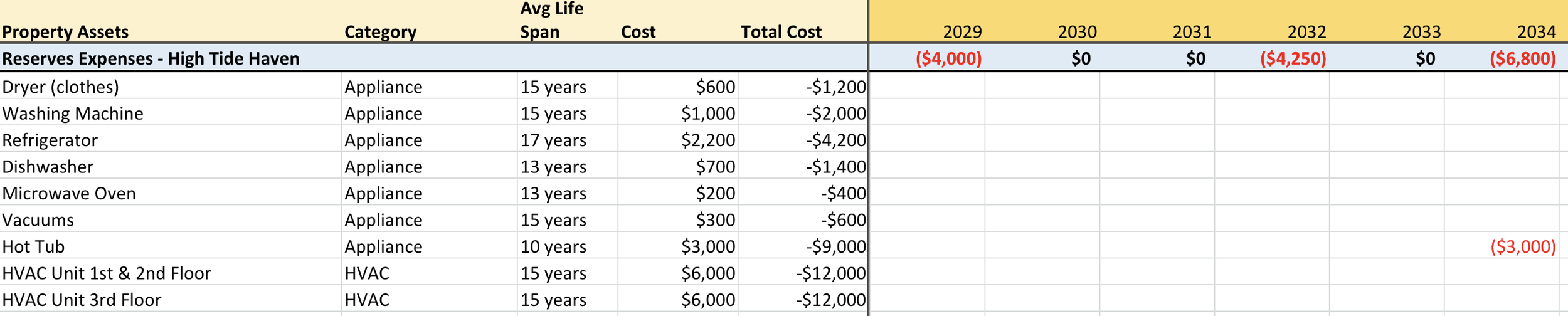
Example of a CapEx planning spreadsheet showing monthly savings for major vacation rental repairs, helping owners protect income and guest experience.
Why CapEx Matters More for Coastal Short-Term Rentals
Owning a beach property is different. Beautiful sunsets come with a side of salt air, humidity, sand, and heavy use.
On Topsail Island, CapEx timelines accelerate because:
Salt air corrodes metal components faster
Humidity strains HVAC systems
Sand and sun wear down flooring and decks
High guest turnover increases wear and tear
That “20-year roof” on paper? Coastal reality may have other plans.
Ocean breezes are great for cocktails—less great for fasteners and fixtures.
This is why CapEx planning for vacation rental owners isn’t pessimistic—it’s realistic.
The Real Cost of Ignoring CapEx Planning
Skipping CapEx planning doesn’t eliminate the expense. It just changes how painful it feels.
When owners don’t plan, CapEx tends to show up as:
Emergency repairs during peak season
Last-minute cancellations or refunds
Discounted bookings due to unresolved issues
Stress-fueled decisions made under pressure
And nothing impacts vacation home ROI faster than a guest review that starts with:
“The house was lovely, but the AC stopped working…”
Planned expenses are manageable. Unplanned ones are disruptive—to income, reviews, and peace of mind.
How Much Should Vacation Rental Owners Save for CapEx?
There’s no one-size-fits-all number, but there are smart frameworks.
Common approaches include:
5–10% of gross rental revenue annually
Monthly saving based on replacement timelines
Adjustments based on:
Property age
Renovation history
Rental intensity
The spreadsheet method still holds up beautifully: list major components, estimate replacement cost and lifespan, divide by months. It’s not glamorous—but it’s effective.
This isn’t about hoarding cash. It’s about avoiding financial whiplash.
CapEx vs. Upgrades That Actually Increase Revenue
Not all big expenses are created equal.
Some CapEx items are non-negotiable:
HVAC
Plumbing
Roofing
Electrical systems
Others can be strategic investments that improve occupancy optimization and nightly rates:
Durable flooring upgrades
Furniture refreshes designed for heavy use
Smart locks and thermostats
Kitchen updates that photograph well
The key difference? ROI.
At CRSJ Rentals, every recommendation goes through the same filter:
Will this protect revenue—or increase it?
Because not every renovation pays rent—but some absolutely do.

Tools on a table ready for routine maintenance or repairs at a Topsail Island vacation rental, part of a proactive CapEx plan.
Timing CapEx the Smart Way
When CapEx happens matters almost as much as what happens.
Smart timing includes:
Scheduling replacements in the off-season
Preventative replacements before peak demand
Coordinating work around bookings to minimize disruption
January is a much better time for a water heater to retire than the Fourth of July.
Proactive planning gives owners options. Reactive repairs remove them.
What Owners Control—and Where Professional Management Fits
CapEx planning is a partnership.
Owners control:
Budgeting and long-term planning
Asset mindset
Financial preparedness
Professional managers handle:
Vendor coordination
Scheduling and oversight
Guest communication during repairs
Protecting the guest experience
You bring the plan. We bring the hard hats, calendars, and calm guest messaging.
Conclusion: CapEx Isn’t the Enemy—Surprises Are
CapEx expenses aren’t a sign something went wrong. They’re proof that assets age, systems wear, and properties work hard to generate income.
The goal isn’t zero repairs.
It’s zero panic.
With smart CapEx planning, vacation rental owners protect:
Cash flow
Guest experience
Long-term property value
And maybe—just maybe—that bonus stays a bonus next time.
Want a clearer picture of your rental’s revenue potential?
Download the Topsail Revenue Insider — a free, instant-download guide that reveals the most common ways local properties quietly underperform and how owners fix them.