
When short-term rental owners think about increasing revenue, they usually jump straight to pricing tools, marketing, or platform optimization. Design is often treated as a “nice-to-have” or, worse, an Instagram exercise.
In reality, small, intentional design decisions can increase STR revenue by 10–20% by improving booking conversion, nightly rates, and guest reviews—without blowing the budget.
This isn’t about designer furniture or trendy decor. It’s about understanding how guests actually use a space, especially in a beach market like a Topsail beach town, and designing with return on investment in mind.
Why Design Is a Revenue Lever (Not Just an Aesthetic Choice)
Guests don’t book floor plans. They book how a place feels.
Design impacts:
Whether a guest clicks on your listing
How comfortable they feel during their stay
What they mention in reviews (or don’t)
Whether they’d pay a higher nightly rate next time
From an STR management and property management perspective, good design reduces friction. Less friction means better reviews, higher occupancy, and pricing power—especially important in competitive markets and shoulder seasons.
Bed Count vs. Sleep Count: The Balance That Actually Works
There’s a constant tension in vacation rentals between maximizing sleep count and maintaining livability.
Yes, more beds can mean:
Larger groups
Higher nightly rates
More bookings from families
But forcing extra beds into every corner can backfire.
What Works
Aim to maximize beds without overcrowding
Bedrooms should still feel like bedrooms, not storage rooms with mattresses
Use bunk rooms strategically, not excessively
Sleeper sofas can add flexibility—but shouldn’t be the primary sleeping solution
Guests can tell when an owner tried to “pack them in.” It shows in photos, it shows in reviews, and it often leads to comments like “felt cramped” or “tight for our group.”
The sweet spot is intentional density—enough beds to attract larger groups, without making the home feel stressful to occupy.
Durable Furniture Beats Pretty Furniture (Especially at the Beach)
Short-term rental furniture lives a harder life than residential furniture. Add sand, salt air, sunscreen, wet towels, and luggage to the mix, and beach properties are even tougher.
Durability isn’t optional—but neither is aesthetics.
A Proven Middle Ground
One of the best strategies is quality furniture with slipcovers:
You still get that clean, white, beachy look
Slipcovers can be washed during turnover if needed
Replacements are far cheaper than replacing entire sofas
Dark leather or heavy materials might survive wear, but they fight the beach environment visually. Guests expect light, relaxed spaces—not something that feels better suited for a city loft.
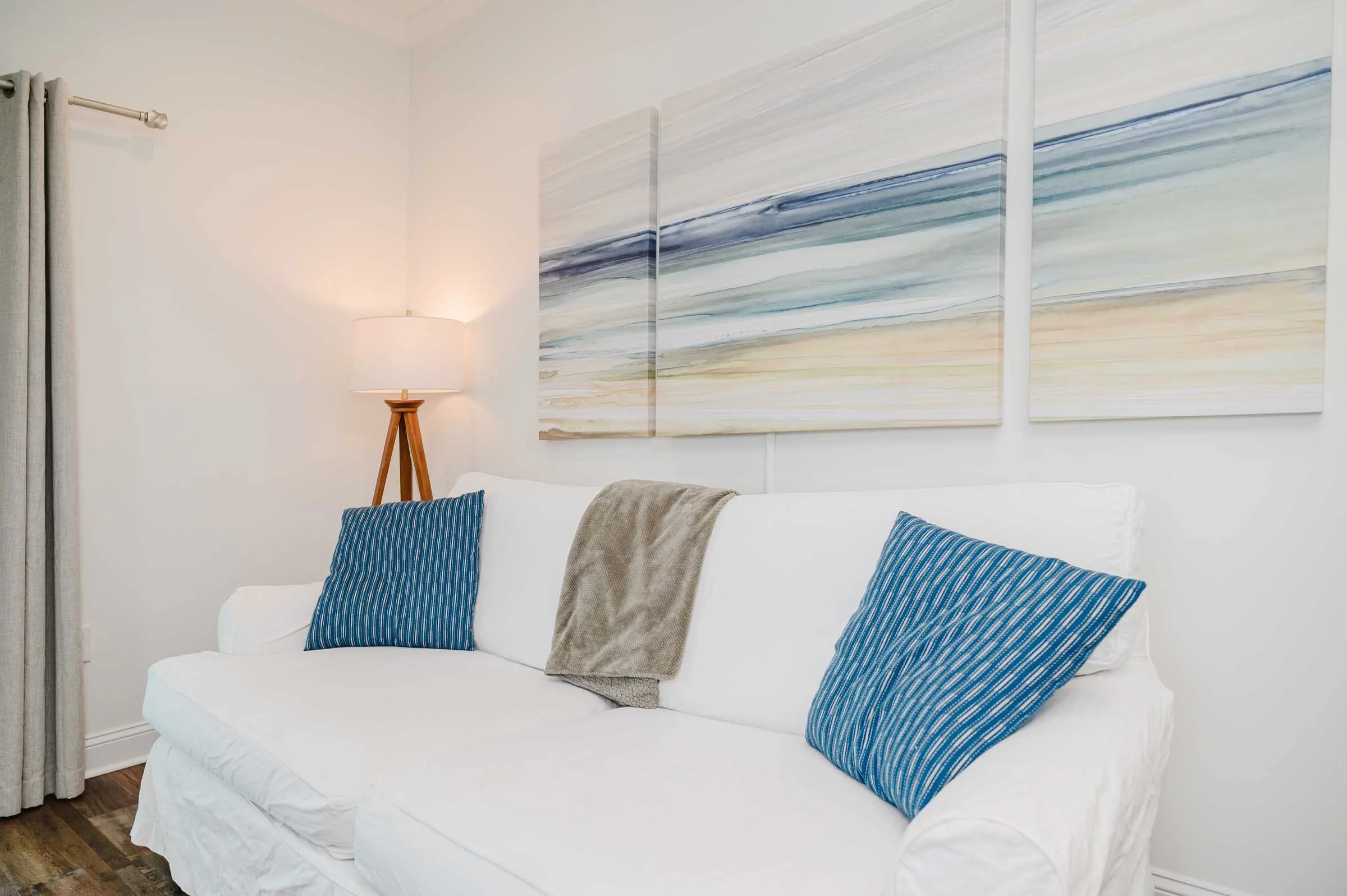
A slipcovered pull-out sofa balances durability and comfort—designed to handle high turnover without sacrificing a clean, beach-forward look.
Fit Matters
Oversized furniture is another common mistake.
Large sectionals can dominate living rooms
Tight walkways kill guest flow
Furniture should fit the scale of the room, not fill it
If guests have to squeeze around a coffee table with luggage, it will show up in reviews—even if they don’t spell it out directly.
Guest Flow: Where Clutter Quietly Kills Reviews
Most negative reviews aren’t about one big issue. They’re about a dozen small frustrations.
Guest flow is one of the biggest ones.
Ask yourself:
Where do guests drop bags when they walk in?
Is there a clear place for shoes, beach gear, and groceries?
Can people move comfortably through shared spaces?
Clutter—both visual and physical—creates stress. And stressed guests don’t leave glowing reviews.
Ironically, less furniture often feels like more value. Clear surfaces, open walkways, and intuitive layouts make a home feel larger, cleaner, and easier to enjoy.
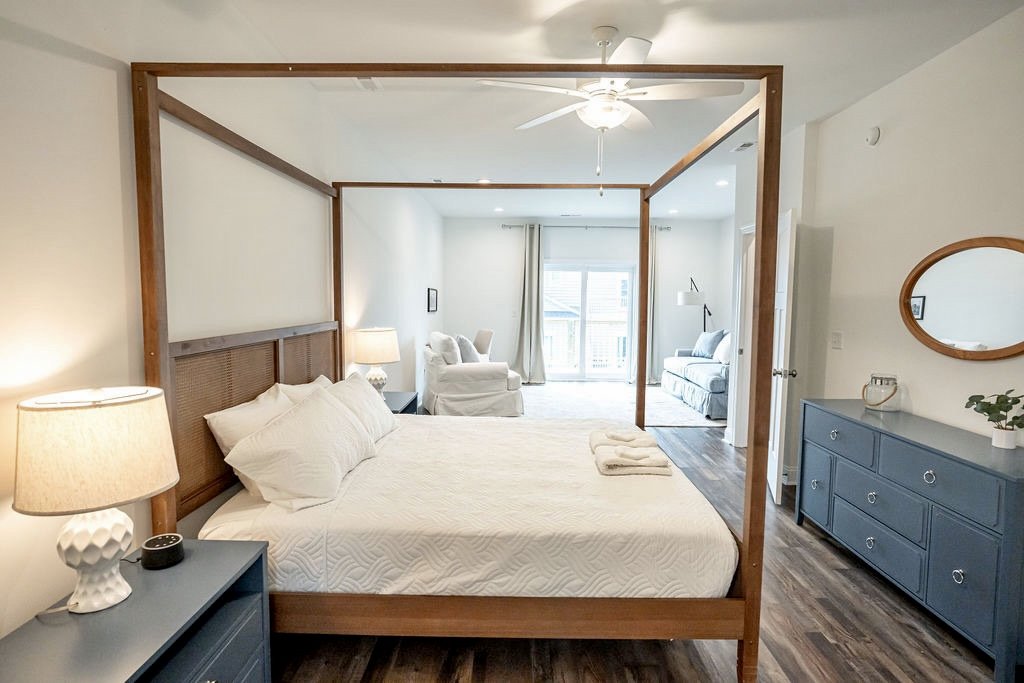
An open-concept primary suite creates a spacious, elegant feel while quietly adding flexibility—ideal for couples or extended families (pull-out sofa) without feeling overcrowded.
ROI-Driven Decor (Not Instagram Fluff)
Designing an STR isn’t the same as styling a photoshoot.
The goal isn’t to impress other owners—it’s to appeal to the broadest, most reliable guest base.
The Right Approach
Let the location do the talking
Subtle coastal tones instead of themed overload
Neutral, calming spaces that feel like a blank slate
A well-designed rental should:
Feel relaxing on its own
Still work if a family adds balloons for a birthday
Not scream “party house” to the wrong audience
Overly themed decor, neon signs, or bar-style setups can boost clicks—but they also increase the likelihood of parties, damage, and reimbursement headaches. Even with “no parties” rules in place, design signals matter.
Design Decisions That Don’t Pay for Themselves
One of the most common mistakes owners make is overspending on amenities that don’t improve revenue.
Ask one simple question before any purchase:
Will this realistically pay for itself?
A Practical Example
A $20 drip coffee maker works perfectly for large groups
It’s familiar, easy to use, and cheap to replace
A $500 luxury espresso machine? Looks great—but breaks easily, confuses guests, and rarely increases nightly rate
This mindset applies everywhere:
Smart TVs don’t need to be premium models
Furniture should be replaceable, not precious
“Luxury” should mean comfort and usability, not fragility
STRs are investments, not showrooms.
Designing for Revenue, Not Just Looks
The highest-performing short-term rentals—whether self-managed, cohosted, or professionally managed—share a few traits:
They feel intentional, not overdesigned
They accommodate groups comfortably
They’re easy to clean, maintain, and reset
They appeal to families, couples, and groups without alienating any one segment
From a Topsail Island property management and Airbnb property management perspective, the best design choices are often the quiet ones. Guests may not comment on them directly—but they’ll show up in bookings, reviews, and repeat stays.
Final Takeaway: Small Choices, Compounding Returns
You don’t need a full redesign to increase STR revenue. You need:
Better bed planning
Smarter furniture choices
Intentional layouts
Decor that supports, not distracts
Design isn’t about trends. It’s about removing friction and letting guests relax.
And when guests relax, they book faster, stay longer, and leave better reviews—which is where real revenue growth comes from.
Want a clearer picture of your rental’s revenue potential?
Download the Topsail Revenue Insider — a free, instant-download guide that reveals the most common ways local properties quietly underperform and how owners fix them.